With the end of the first month of the 2025-2026 school year, the student body has begun to get back in the swing of Kingsway life. They are back into the old schedule, old SMART rules, and daily routine. However, new additions have been made to the norm. School is officially back in session, and Kingsway Regional High School kicked off the school year with a wave of unexpected changes. This year, we see the introduction of two new policies: the phone pouches and the Securly pass system.
While it is true that students have and will continue to have to sign in using their student ID as they arrive or depart from their locations, the tracking of the actual passes has transferred to an online system called Securly. Securly is a company that works in K-12 schooling, technological security, and wellness. They provide online services for schools regarding cybersecurity, student data protection/sharing, and their Securly Hall Pass. With these passes, students are allotted 10 passes per day, 5 Now Passes, and 5 Appointment Passes. When a student needs to use one of these passes, they simply submit a pass to their teacher, allowing them to see their place in the cue. Then, once their teacher approves a pass, they are able to leave the classroom and head to the location they selected. While out, their computer keeps a running timer that their teacher can view and end when the student returns.
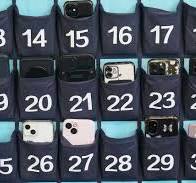
The second latest policy, the phone pouches, has also been quite the change for Kingsway. For years, students have enjoyed the freedom of being allowed to keep their phones in their backpacks and using them only when instructed or appropriate. Now, they are required to place their phone in calculator pouches at the beginning of class.
As with the introduction of anything new, there are mixed reviews. Some feel these policies will help to improve our schools’ efficiency and learning environment, while others believe that they only serve as a complicated inconvenience for students.
Pros
In years past, passes have been a source of issues. Students would take the opportunity to wander, visit other classes, and crowd the halls. With the addition of this system, there is a more streamlined and manageable hallway experience. The queue that prompts students as to their place in line within their respective wing ensures that a larger number of students are not crowding the halls at once. This, in addition to the time monitor, encourages students to use their time in the halls wisely as other students are waiting for them. The limited number of passes also has a similar effect, as students are less likely to use a pass just to roam if they know they are only permitted a certain number per day. And while these constraints are mostly positive, some view them as far too restrictive. For students who regularly used their passes responsibly prior to this system, nothing should change. However, teachers do hold the ability to override the pass system and allow students to use a pass as needed. These digital passes also provide a new level of security as they allow teachers to see the location and destination of students when they are out. That way, in the case of an emergency, these students can be accounted for.
Phones have also been an issue and a constant distraction in class. Students were repeatedly told off for using their phones at times when they were told not to, interfering with both instruction and the integrity of work. Students have not lost any significant tool provided by their phone that could not be found on their Chromebooks. For the many concerned about communication, students are still permitted to use their phones during SMART and passing periods, giving them far more than an hour to message friends, family, clubs, and use their phones in any way they need.
Cons
While these new rules were meant to maintain Kingsway’s motto of excellence, they are doing just the opposite. The cellphone policy’s main purpose is to promote focus by limiting access to modern-day’s greatest distraction, phones. However, this logic fails when a distraction that can’t be put in a pocket, a Chromebook, lies right in front of students. It makes the rule pointless. Beyond its lack of usefulness, it also limits access to communication in emergencies, a major concern that students and parents alike share. Additionally, the effects do not stop with students. When phones go in a classroom pocket, teachers are suddenly held accountable for twenty phones and the potential for mixups or stealing, which is an unreasonable expectation on top of an already demanding job. In the same breath, Kingsway also added the Securely system, a source of arguably more distraction than phones. Now, teachers must stop what they are doing in the middle of class, go to their desk, approve a pass on their computer, and end the pass when the student returns. It might prevent lingering in the halls, but this constant interruption ends up destroying the rhythm of the lesson. Additionally, when students have to wait in the system’s queue, their focus is not on the class at hand; it is glued to their Chromebook, refreshing the page until they can finally go. On a larger scale, the very concept of Securely is concerning. Hall passes, bathroom monitors, and sign-in/out kiosks are all already put in place under the justification that every establishment needs order. Students had to and were willing to accept that. However, piling on additional procedures is crossing a line –a line between structure and restricting basic human needs. While some students at Kingsway have vandalized bathrooms or wandered the halls to avoid class, it does not justify every student having to pay the price for the actions of a few is excessive. No one can deny that schools need structure, but when structure bleeds into the unreasonable, it stops supporting students and starts confining them.