
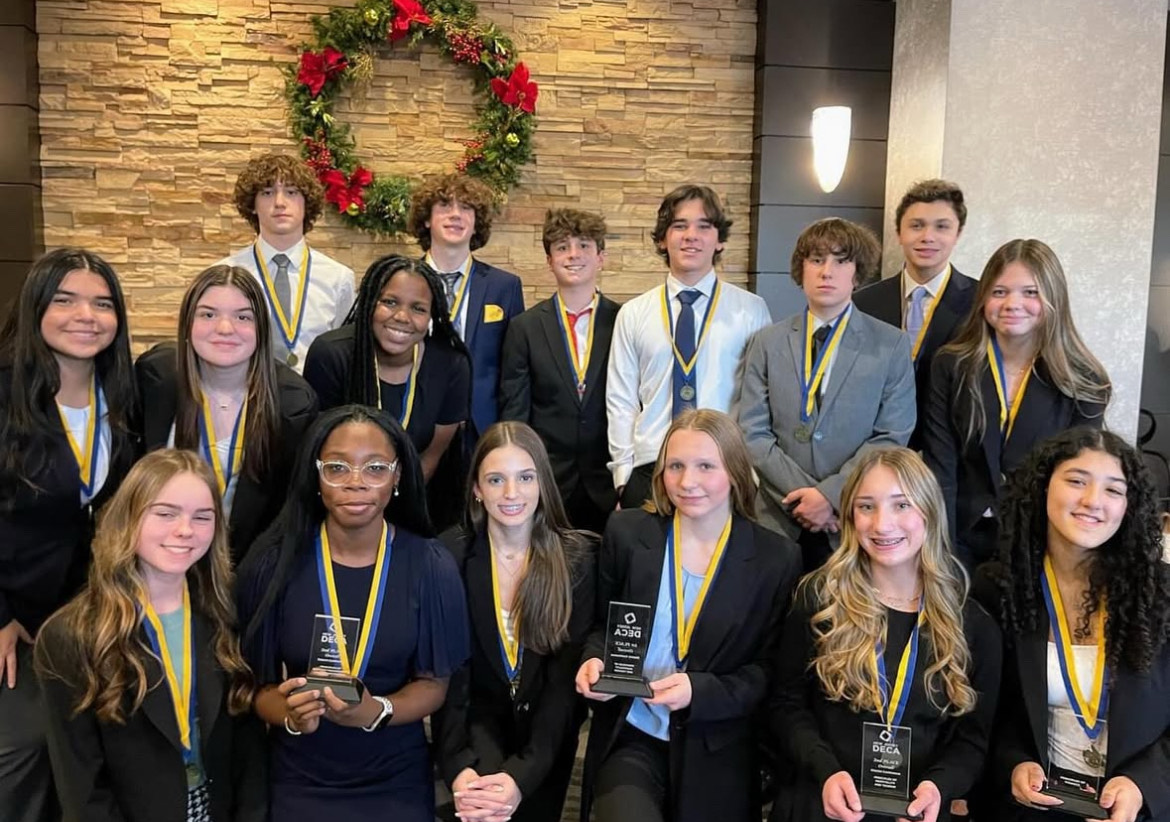
This piece, as we’ve interviewed Mr. DiFrancesco, also known as the DECA advisor, highlights how DECA prepares students for real-world careers by building confidence, professionalism, communication, and critical thinking skills. Through competition, mentorship, and long-term development, students gain experiences that extend beyond the classroom, creating lasting impact, meaningful connections, and a strong sense of belonging.
1. When the new DECA season kicks off, what is your approach to guiding new members? How do you transition students from the classroom mindset to the competitive mindset?
“My approach has always been to find ways to give students experiences through DECA that they will be able to use and carry on, potentially, for the rest of their lives. So when you ask how we take the classroom to the competitive mindset, sometimes it is really a question of how do I take the classroom to the career mindset. In that process, if we focus and visualize what DECA, or the category that I am competing in, can mean to me, then we will be competitive because we will have a clear vision of why we are doing what we are doing, why we are practicing what we are practicing, and what skills we are developing.”
“To be more specific, DECA is mostly a business competition focused on your ability to analyze a situation and then articulate that as cleanly and as clearly as possible. So we focus a lot on communication skills, how to communicate, and the ways to break that down. We also focus on critical thinking. You have to think quickly. You have to think fast. What is your process? What do you control going in, and what do we not know that we will have to think on our feet about when we are posed with a certain case study or scenario.”
2. Can you describe the evolution you see in a student from the day they first present their project idea to the moment they walk into a judge’s room at the state or national level?
I do not always get to see the finished product, because I am not always in the room when students present in front of a judge or make it to ICDC or the state level. However, I do see what that preparation looks like. It is exciting for me when students, whether that be freshman year, sophomore year, junior year, or senior year, have success. We have had freshmen make ICDC, our international contest, every year that I have been a DECA advisor.
The exciting part for me is when I start to see a click, when I think, “This student has a real chance.” It is not everybody, but I am very excited for those students. As a freshman, a student may be timid or unsure, and then as a junior or senior, they have really developed confidence in their voice. Not every teacher gets to be a part of that, because sometimes they only teach students for one semester or one year. For me, as the DECA advisor, one of the more rewarding pieces of this role is being able to see students really develop and change the way they approach a role-playing case study.
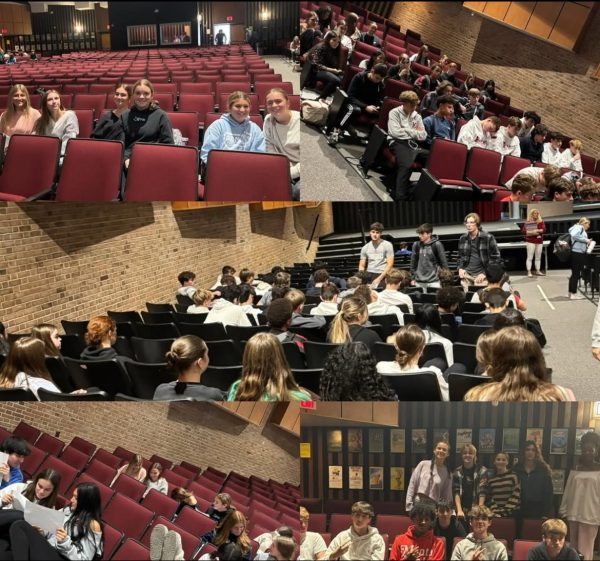
3. Over your years advising DECA, is there a specific student success story, breakthrough moment, or unexpected challenge that stands out as a personal highlight for you?
“Dylan Dukes is always an easy one to think of, because he was the first student to be elected to the State Officer Board of NJ DECA from Kingsway, and that was a big moment for us. Leon McCoy, his freshman year, was a finalist at ICDC, and I remember that moment feeling really special.”
“Students like Mason Skronski and David Oravetz have shown what it really takes to succeed at the top level. Mason has qualified for ICDC two out of the three years he has been a competitor, only missing once. Our president now, Anya Patel, has always been a leader in the classroom and outside of it.”
“I think the biggest individual success story is probably Nolan Stewart. While he did win first in his category at districts last year, it was test only due to a snowstorm that prevented role plays, but he would have excelled in those as well. What Nolan is trying to build, and is building, for our students regarding practice and preparation will have a significant impact on hundreds, if not thousands, of students who walk through these doors. Many of the individuals I mentioned have great individual accolades. Nolan’s accolades do not show up yet. The hard work he is putting in is not always visible, but the practice model and attention to detail he has developed could have a lasting impact on our chapter. Those are just a handful of success stories that I felt should be shared.”
4. What is the biggest thing that an industry judge is looking for in a student’s presentation, whether it’s a prepared project or an impromptu pitch?
“Professionalism is what judges are looking for. Does this person sound like someone who would already be in this job? Can this high school student act, simulate, or walk through what they would be doing six or eight years from now when they are in a professional position, such as an assistant manager at a shop or road location? I think that is the main thing judges evaluate. Can you apply those skills as a 15, 16, 17, or 18-year-old to a scenario or role play that reflects what would be happening as an adult?”
5. What is the single most important lesson or skill you want your students to take away from the DECA experience, regardless of whether they win or lose?
“These contests and competitions give you opportunities to go to Cherry Hill, where you will be with hundreds of other DECA students, and to Atlantic City and ICDC, where there are thousands of students. Those opportunities give you the chance to meet new people from across the country who are taking similar classes, applying to the same colleges, thinking about similar careers, and having people doing those things alongside you can help that path and make those goals become a reality.”
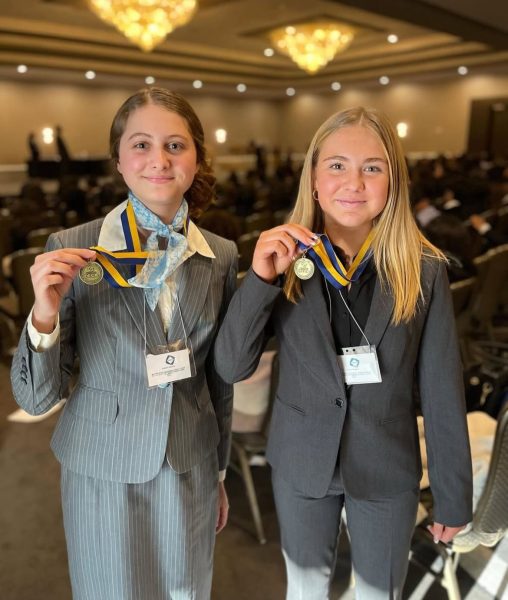
6. If a freshman came to you today and asked why they should commit to DECA and the rigor of the competition process, what is your most compelling pitch to them?
“My most compelling pitch would be that regardless of the path you choose in life, whether it is business-related or not, DECA teaches interview skills. Many jobs require some form of interview, whether informal or formal. Your repetition and experience doing that over and over again can lead to future success.”
“In addition to interview skills, there is teamwork and camaraderie that comes from working with others. It is a team or a family within a very big school. Kingsway is not a small school, and it is easy to get lost or fall into small groups. DECA provides a home for 164 students this year to show up, be involved, and be part of something, which is a valuable part of the high school experience.”
“Along with transferable soft skills like interviewing, students gain real-world memories that cannot be replaced. Lastly, the content itself is interesting, whether it is entrepreneurship, math, management, marketing, finance, or hospitality. Many students, especially in hospitality, work in those industries while in high school or beyond. DECA can help them while they are in those jobs and potentially impact their career trajectory. Interview skills, camaraderie, meaningful memories, and practical knowledge all make DECA a valuable experience”.